
English| EUR
Suggested for you
More currencies
Choose a language
Ahangama's jewellery workshops offer structured courses that span days or weeks, not just single-session experiences. Understanding the full cost—tuition, materials, tools, and certification—helps serious students budget for programs that deliver professional skills rather than tourist introductions.
Quick answer
Jewellery making courses in Sri Lanka price structures vary by program length and material choice. Single-day introductory sessions start around 8,000–12,000 LKR including basic materials, while multi-day certification programs range from 45,000–85,000 LKR for five- to ten-day intensives. Silver and gemstone courses carry higher material fees than brass or copper programs, and certification from recognized craft associations adds 5,000–10,000 LKR to the total.
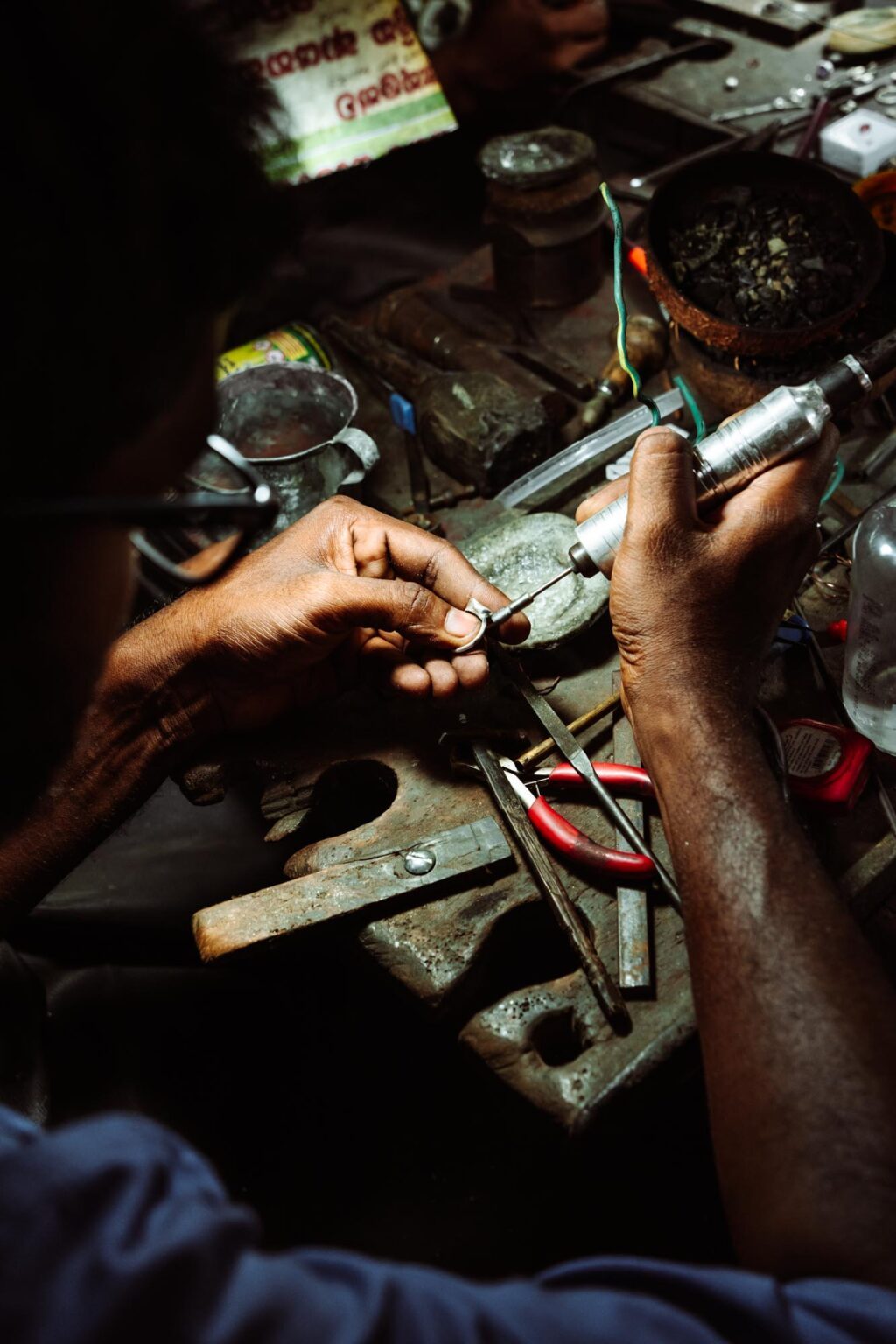
Ahangama's coastal craft quarter hosts working silversmiths and gemstone setters who teach alongside their production schedules. The workshops here are not retail demonstrations—they are training environments where serious students spend multiple days mastering techniques under artisans who supply Colombo's high-end galleries. Understanding jewellery making courses in Sri Lanka price means distinguishing between tourist taster sessions and vocational programs designed to build portfolio-ready skills. Material costs form the largest variable. Introductory courses use brass and copper, with metal included in the session fee. Silver programs require students to purchase raw material separately—current rates sit near 180–220 LKR per gram—and a beginner's ring or pendant consumes fifteen to thirty grams. Gemstone setting courses add stone procurement to the budget: uncut sapphires from Ratnapura start at 3,000 LKR per carat for training-grade material, while polished cabochons suitable for bezel work cost 8,000–15,000 LKR depending on clarity and origin. Multi-day programs often include a material allowance in the headline fee, but students working on ambitious final pieces should budget an additional 10,000–20,000 LKR for metal and stones. Certification distinguishes hobbyist courses from vocational ones. Programs accredited by the National Craft Council or the Sri Lanka Jewellery and Gem Authority issue certificates recognized by urban jewellers and export workshops. These courses include documented skill assessments—soldering, stone setting, finishing—and cost 50,000–85,000 LKR for seven- to ten-day intensives. Non-certified workshops, common in Ahangama's independent studios, focus on technique over credentials and price lower, typically 35,000–55,000 LKR for similar durations. Both formats teach the same metalwork fundamentals, but students planning to work in Colombo's jewellery quarter or apply for craft studio positions value the formal documentation. Scheduling affects cost indirectly. Peak months—December through March—see higher per-session fees as international students fill limited workshop slots. Courses during monsoon season, May through August, often discount tuition by 15–20 percent while maintaining the same instructor ratios and material quality. The Ahangama jewellery making courses in Sri lanka price guide reflects this seasonality: a five-day silversmithing intensive priced at 58,000 LKR in February may list at 48,000 LKR in June. Serious students with flexible schedules gain both lower costs and quieter studio conditions by booking outside the high season.
“Silver programs require students to purchase raw material separately—current rates sit near 180–220 LKR per gram—and a beginner's ring or pendant consumes fifteen to thirty grams.”
Jewellery making course costs in Ahangama are structured around session-based tuition, material usage, and optional certification for long-term students. Entrance to the facility is 0 LKR, as all fees apply exclusively to active workshop participation.
Verdict: Serious students typically pay based on the duration of their program and the market value of the specific materials selected for their projects.
The jewellery making training facility in Ahangama operates on a consistent schedule throughout the week. Students are welcome to attend daily to facilitate their progression through longer-term programs.
Longer certification programmes require advance preparation beyond a drop-in workshop booking.
Everything you need to know about jewellery making courses in sri lanka price
The jewellery making courses in sri lanka price varies based on the duration and the complexity of the techniques taught in Ahangama. Because this is an informational site, we provide transparent breakdowns of training fees without hidden markups. Serious students should reach out to verify current rates for multi-day programs.
Material costs depend on whether you use base metals or precious stones during your sessions. Most jewellery making courses in sri lanka price structures separate tuition from the physical materials consumed during the practice. You will find that sourcing local silver or gemstones adds to the overall investment of your craft education.
To secure a spot, you can use the booking links provided on our site to connect directly with local instructors. Researching the jewellery making courses in sri lanka price beforehand helps you compare different local masters and their specific workshop focuses. Ensure you check availability well in advance, especially during the peak tourist season in the Southern Province.
Certification for serious students is typically awarded upon the successful completion of longer, modular training programs. These certificates often document the hours spent on wire wrapping, stone setting, or soldering. While these programs provide valuable skill validation, they are distinct from formal academic degrees in gemology.
There is an entry fee of 0 LKR to visit the studio space in Ahangama. You only pay for the specific workshops or practical sessions you choose to book. This policy ensures that visitors can explore the facility and understand the learning environment without financial pressure.
Yes, beginners are welcome to start with foundation sessions before committing to advanced professional training. When evaluating the jewellery making courses in sri lanka price, consider how many hours of instruction are included for entry-level learners. Many students find that starting with a day session helps determine if they want to pursue long-term apprenticeship.